Upcoming Changes to Payee Address Requirements
What’s changing?
An industry-wide regulatory update introduced by the European Payments Council (EPC) will require changes to the way payee address information is captured and maintained for payments initiated through Business On Line.
What this means for you?
At present, the address lines in the ‘Payee Creation’ section are available as free-text entry fields within the Business On Line channel, as detailed below.
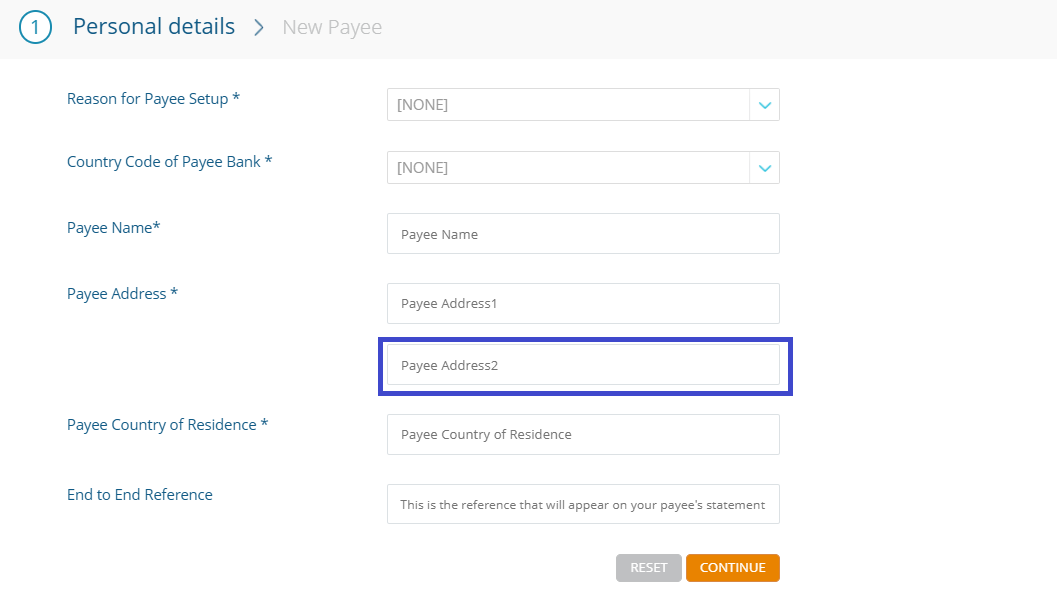
The primary impact of this change is related to the address information required for payees within Business On Line.
Mandatory requirements include:
- The second line of the address (Payee Address2 as shown on the above image) must be populated with the town or city of the payee.
- The payee country of residence is a valid country and is spelled correctly.
These changes are designed to standardise address data and improve payment processing efficiency.
What action is required?
To ensure you can continue making payments without disruption:
- Some existing payees will require address updates to meet the new requirements outlined.
- Where possible, we will automatically update payee details using the information already held.
- Following upcoming changes within the Business On Line channel, users will be prompted to review and update any payees that require attention.
How to prepare
We recommend taking the following steps now:
- Review your internal processes for creating new payees to align with structured address requirements.
- Remove any unused or inactive payees to reduce the number of updates required on your Business On Line profile.
When adding or updating a payee, please ensure:
- The Town/City field is correctly populated within the second address line (‘Payee Address2’)
- The country is selected and reflects the payee’s correct country of residence
Providing accurate, structured address information will help ensure payments continue to be processed smoothly and reduces the risk of payment interruption when the new regulations are implemented.
Need more information?
Should you require additional support, or have any further questions on the upcoming changes, please contact our Business On Line Customer Helpdesk.
Protect your business
Go to the Bank of Ireland Security Zone to learn how to stay safe from scam calls, fake payment requests, CEO fraud and more. Never share your one-time codes from the Approve app. Always keep them private.
Bulk Payments – Mandatory Address Changes
What’s changing?
If you submit Bulk Payment files, you may need to take action to ensure your payment files continue to be processed.
Customers who include address information within their bulk payment files will be required to use either a Structured Address or Hybrid Address format. Customers using unstructured address formats may experience payment or file rejections after this date.
What this means for you?
The impact of this change depends on how you submit Bulk Payment files.
If you currently include postal address information within your PAIN.001 (Credit Transfer) or PAIN.008 (Direct Debit) files, or plan to do so in the future, you may need to update your file format and address information to meet the new requirements.
If you do not include address information in your Bulk Payment files and do not intend to do so in future, no action is required at this time.
These changes are designed to standardise address data and improve payment processing efficiency.
Mandatory requirements include:
- Address information, where provided, must be submitted using either a Structured Address or Hybrid Address format.
- A valid Town Name and Country Code must be included where address information is required.
- Address records containing only a Country Code and no Town Name will not meet the new requirements and may result in payment rejection.
- Address information is mandatory for certain payments and collections involving non-EEA countries.
What action is required?
- Review whether your organisation currently includes postal address information within PAIN.001 or PAIN.008 files.
- Engage with your IT department, software provider or file generation vendor to determine whether changes are required.
- Review the address information held within your systems to ensure it can support the new requirements.
- Where required, update your file formats and address fields ahead of the implementation date.
Failure to comply with the new address requirements may result in rejected transactions and/or rejected files for payments valued or scheduled in the future.
How to prepare
Option 1: Structured Address Format
Customers can adopt the latest file versions:
- PAIN.001.001.09 for Credit Transfer files.
- PAIN.008.001.08 for Direct Debit files.
Bank of Ireland can accept Structured Address formats today.
Option 2: Hybrid Address Format
Hybrid Address formats can be used where supported.
When address information is included, a minimum of:
- Town Name
- Country Code
- Up to two Address Line fields
must be provided to meet the new requirements.
Customers using Direct Debit files may need to adopt the latest PAIN.008 file version when using Hybrid Address formats.
Please note the latest file specification can be found on our documentation page
Important reminders
Address information is mandatory for certain Non-EEA payments
Address information must be included for:
- PAIN.001 Credit Transfer files where payments are being made to a non-EEA country or territory.
- PAIN.008 Direct Debit files where collections are being made from a bank located in a non-EEA country or territory.
No action may be required
If you do not currently submit postal address information within your Bulk Payment files and do not intend to do so in future, there is no action required at this time.
Bank of Ireland recommendation
We recommend that Bulk Payment customers engage with their IT department or software provider as early as possible to understand any changes required to their payment file generation processes.
Preparing in advance will help ensure payments continue to be processed successfully when the new requirements take effect.
Need more information?
Should you require additional support, or have any further questions on the upcoming changes, please contact our Business On Line Customer Helpdesk.
Protect your business
Go to the Bank of Ireland Security Zone to learn how to stay safe from scam calls, fake payment requests, CEO fraud and more. Never share your one-time codes from the Approve app. Always keep them private.